

Choosing a heat pump is easier when you see the differences side by side. If you are wondering what is the best heat pump for the money, this guide compares four leading models using details from their product pages. The aim is to give you clear, practical information to help you decide which one fits your home, budget and heating needs. As the UK government’s Clean Energy campaign points out, heat pumps are suitable for most homes — but success depends on heat demand, insulation, radiator sizing and system design, not just the brand.
Quick Overview
| Model | Output | Efficiency | Noise | Key Point |
| Grant Aerona³ 6 kW | 6 kW | A+++ | 54.2 dB at 1 m | Compact and reliable |
| Samsung HT Mono 8 kW | 8 kW | High temp up to 70°C | Very quiet | Strong cold-weather performance |
| Vaillant aroTHERM Plus 7 kW | 7 kW | SCoP up to 5.03 | Quiet | Ideal for modern retrofits |
| Mitsubishi Ecodan 6 kW | 6 kW | A+++ | Ultra quiet | Trusted unit for UK homes |
Price Guide: What Is the Best Heat Pump for the Money?
Heat pump prices vary across brands and retailers. The figures below show the relative cost of each model. These prices refer to the unit only unless stated.
- Grant Aerona³ 6 kW: typical unit price around £3,000 to £4,200. Some installation packages start from £3,150 plus VAT.
- Samsung HT Mono 8 kW: typical unit price around £4,000 to £7,000 depending on the retailer and package. Higher cost reflects higher output and higher temperature performance.
- Vaillant aroTHERM Plus 7 kW: typical unit price around £4,100 to £4,700.
- Mitsubishi Ecodan 6 kW: typical unit price around £2,900 to £3,800.
Full Installation Costs
Full installation costs are naturally higher than the unit price. Most UK homes fall into the £8,000 to £12,000 range after the Boiler Upgrade Scheme grant. The standard BUS grant is £7,500 for air-to-water and ground-source systems.
Eligible off-gas-grid properties replacing oil or LPG heating can receive an uplifted £9,000 grant, available from 21 July 2026 to 31 March 2027 under the 2026 BUS Amendment Regulations.
To qualify for the grant, your installer must hold current MCS certification for the relevant technology — this is a legal requirement under Ofgem BUS guidance. Always check your installer’s MCS status before signing anything.
What Affects Cost
- Size of the home
- Quality of insulation
- Cylinder size
- Radiator upgrades
- Pipework condition
- Outdoor location
- Brand choice
- Installer rates
These points explain why two quotes for the same model can be very different. It is important to use an official directory to find a local installer, get at least three quotes and compare the full scope of work, not just the equipment price. The survey stage always matters.
Grant Aerona³ 6 kW
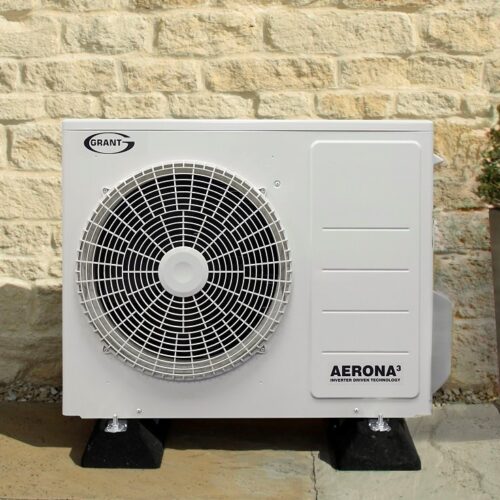
A good match for smaller homes needing strong efficiency without taking up much space. The Aerona³ has an A+++ rating and a working range from minus 20°C to 43°C. This gives steady performance in a typical UK winter. The noise level is 54.2 dB at one metre, which gives neighbours a clear figure to compare against planning guidelines.
The unit is compact at 67.5 cm high and 89.8 cm wide. It carries a 7-year pump warranty and a 25-year cylinder-shell warranty when supplied as a package — check current manufacturer documentation for exact terms as these can change. Aspecte is an approved Grant UK G1 Installer for Norfolk, Suffolk and Cambridgeshire, which means they have completed Grant’s own training and assessment programme and can offer extended product warranties on Grant equipment.
- Small to medium homes
- Limited outdoor space
- Owners who want a proven and efficient model
Samsung HT Mono 8 kW
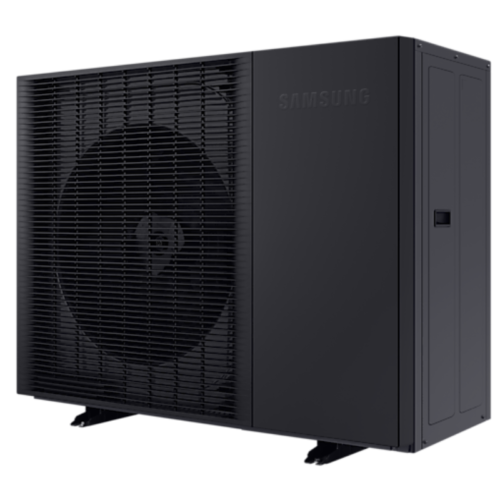
This model suits homes with higher heating demands. It delivers hot water up to 70°C, helping when replacing an older boiler that ran at higher temperatures. It works in extreme cold down to minus 30°C, providing extra stability during cold snaps.
Samsung notes the system runs very quietly. The product package includes a 170 litre Joule cylinder and a radiator upgrade kit. This makes it a practical choice for a full system replacement.
- Medium to larger homes
- Higher hot water use
- People who want strong performance in cold weather
Vaillant aroTHERM Plus 7 kW
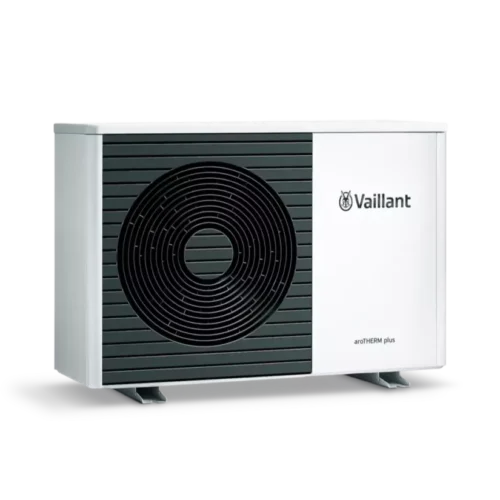
A popular option for retrofits. It reaches a SCoP of up to 5.03 under laboratory conditions — real-world performance will vary depending on system design, flow temperatures and insulation levels. It uses R290 refrigerant which has a lower global warming potential. The package includes a 150 litre Unistor cylinder.
Vaillant positions this model as a strong choice for upgrading an existing heating system with less disruption to the home.
- Existing homes moving away from gas or oil
- Buyers who want solid energy performance and a trusted brand
Mitsubishi Ecodan 6 kW Monobloc
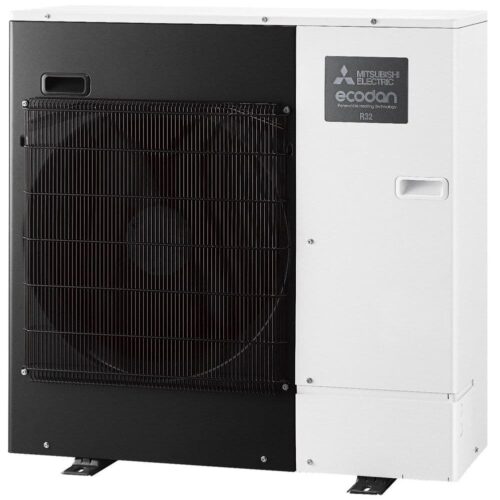
A compact monobloc unit built for UK homes. It has an A+++ rating and works between minus 20°C and 35°C. The brand highlights ultra quiet operation. The product listing shows it paired with a 150 litre pre-plumbed cylinder to help reduce installation time.
The simple design appeals to homeowners wanting a neat outdoor unit that blends into the property.
- Homes where noise is a concern
- People who want a reliable model from a well known manufacturer
Choosing the Best Heat Pump for Your House
Finding the best heat pump for house setups starts with the size of your home. A smaller property usually suits a 6 kW unit like the Grant or Mitsubishi. A larger home or one with higher hot water demand may need the 7 kW Vaillant or the 8 kW Samsung. One practical example: a typical three-bedroom semi-detached property with cavity wall insulation and standard radiators will often sit in the 6-8 kW range — but only a room-by-room heat-loss calculation, as required by MCS design standard MIS 3005-D, can confirm the right size for your specific home.
The Grant has clear dimensions which help when planning placement in a tight garden.
If the unit sits near bedrooms or neighbours, models with clear noise data help you weigh up the impact.
If you are replacing a high-temperature boiler, Samsung’s higher hot water output can reduce the need for radiator upgrades. If you want a smooth retrofit with minimal disruption, the Vaillant is designed around that.
Recent government-controlled testing shows how heat pump performance can vary based on external factors like installation quality and home insulation. This is why the survey and installer choice matter as much as the model itself.
“Heat pumps don’t perform like boilers.”
The Carbon Trust
A long warranty or established manufacturer can reduce long term risk.
Finding the Best Heat Pump to Buy
All four heat pumps offer strong performance. Finding the best heat pump to buy depends on your home, heating habits and priorities. If you are unsure, a heat loss survey will confirm the correct size and help you match each model to your property. Aspecte covers Norfolk, Suffolk and Cambridgeshire, offers free quotations, and holds an insurance-backed installation warranty — you can request a survey directly if you are in the area.
Frequently Asked Questions
What is the best heat pump for the money?
For a typical UK home, an air-to-water air-source heat pump usually offers the best value. They are less disruptive and considerably cheaper to install than ground-source systems. Finding the right system depends on a proper heat-loss calculation and your electricity tariff, not simply picking the cheapest unit on the market. You can read more about air-source heat pumps for residential properties to understand the basics.
How do I choose the best heat pump for house retrofits?
Choosing the right model means comparing units based on your property’s actual heat demand. An MCS-certified installer must complete a room-by-room heat loss calculation to size the system correctly. A unit that is too large or too small will reduce your comfort and efficiency. You can view the MCS Heat Load Calculator to see what this process involves.
Are heat pumps cheaper to run than gas boilers?
Running costs depend on your home’s insulation, flow temperature and electricity tariff. Heat pumps produce multiple units of heat per unit of electricity, but electricity currently costs more per kWh than gas. A well-designed system using a suitable time-of-use energy tariff can be cheaper to run. The Energy Saving Trust offers more details on expected running costs.
Do I need to replace all my radiators when deciding on the best heat pump to buy?
You do not normally need to replace every single radiator. Heat pumps commonly deliver water at lower flow temperatures of around 35-45°C. Your installer will use sizing calculations to show exactly which radiators need upgrading to meet room demand. Blanket replacements are rarely necessary without evidence.
How much is the Boiler Upgrade Scheme grant in 2026?
The standard grant is £7,500 for eligible air-to-water and ground-source systems in England and Wales. Eligible off-gas-grid properties can receive an uplifted £9,000 grant between 21 July 2026 and 31 March 2027. Your installation must meet scheme requirements and be done by an MCS-certified installer to qualify. Check the government guidance to confirm your personal eligibility.